
Reef Cloverson / Coral science
Articles
Explore the research behind coral biology and aquaculture, with clear explanations of each study’s findings, methods, and limits.
Sep 24, 2026 · 6 min read
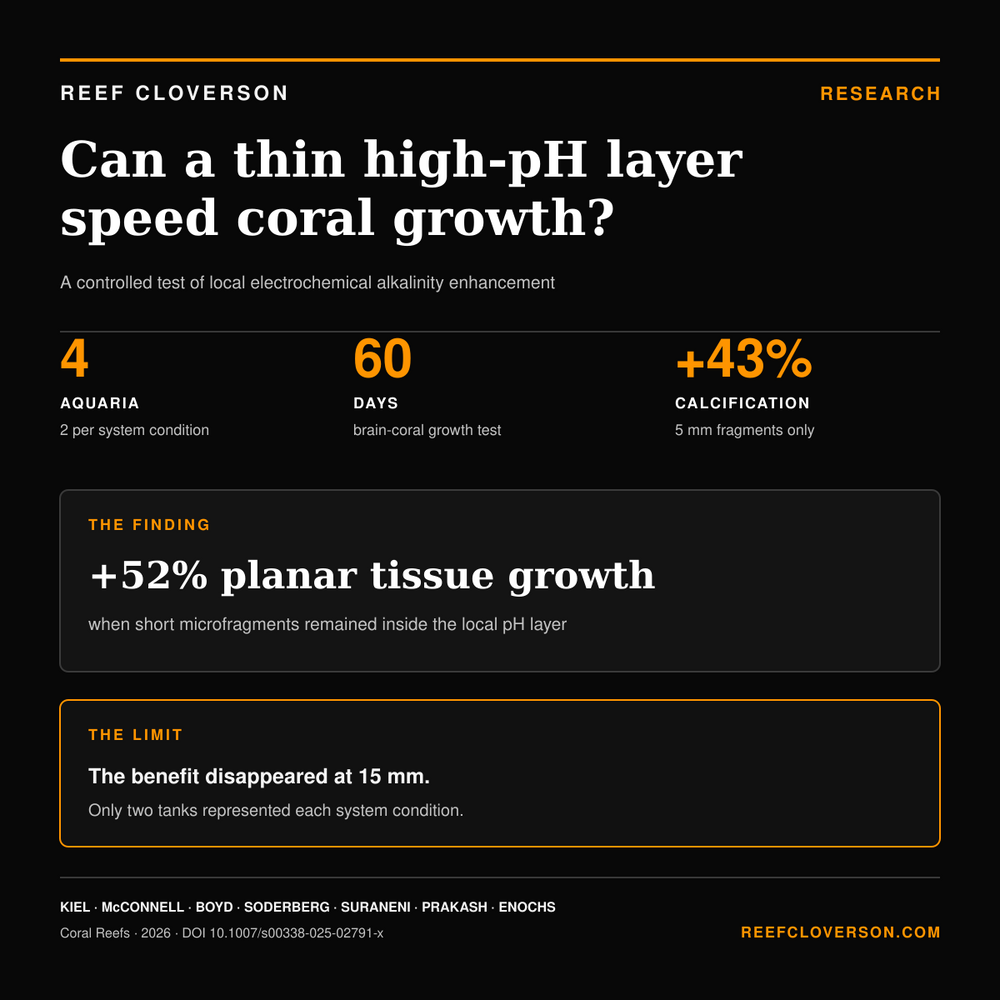
Can a thin high-pH layer speed coral growth?
A 2026 University of Miami–NOAA aquarium study found faster calcification and tissue spread only in 5 mm brain-coral microfragments kept within a...
Read review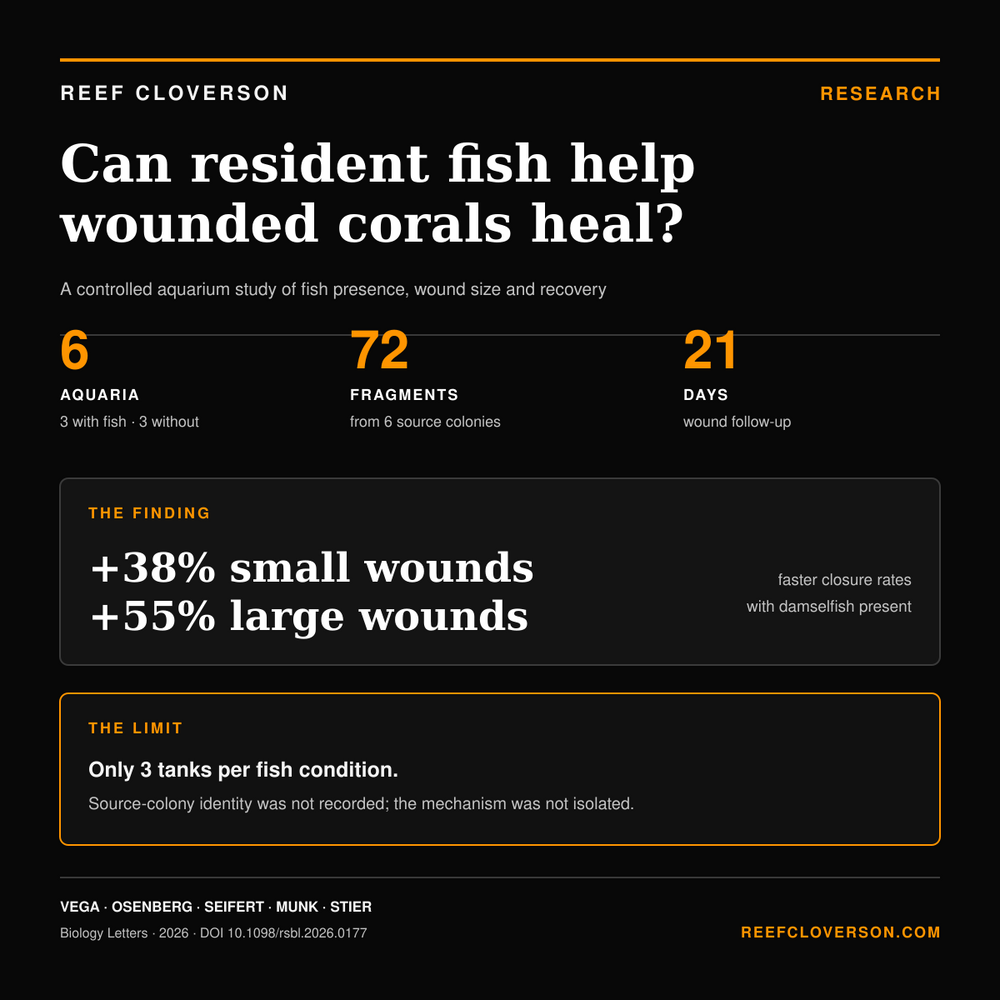
Sep 24, 2026 · 6 min read
Can resident fish help wounded corals heal?
A six-aquarium experiment found that resident damselfish increased wound-healing rates in Pocillopora, especially for larger injuries, but only three tanks represented each...
Read review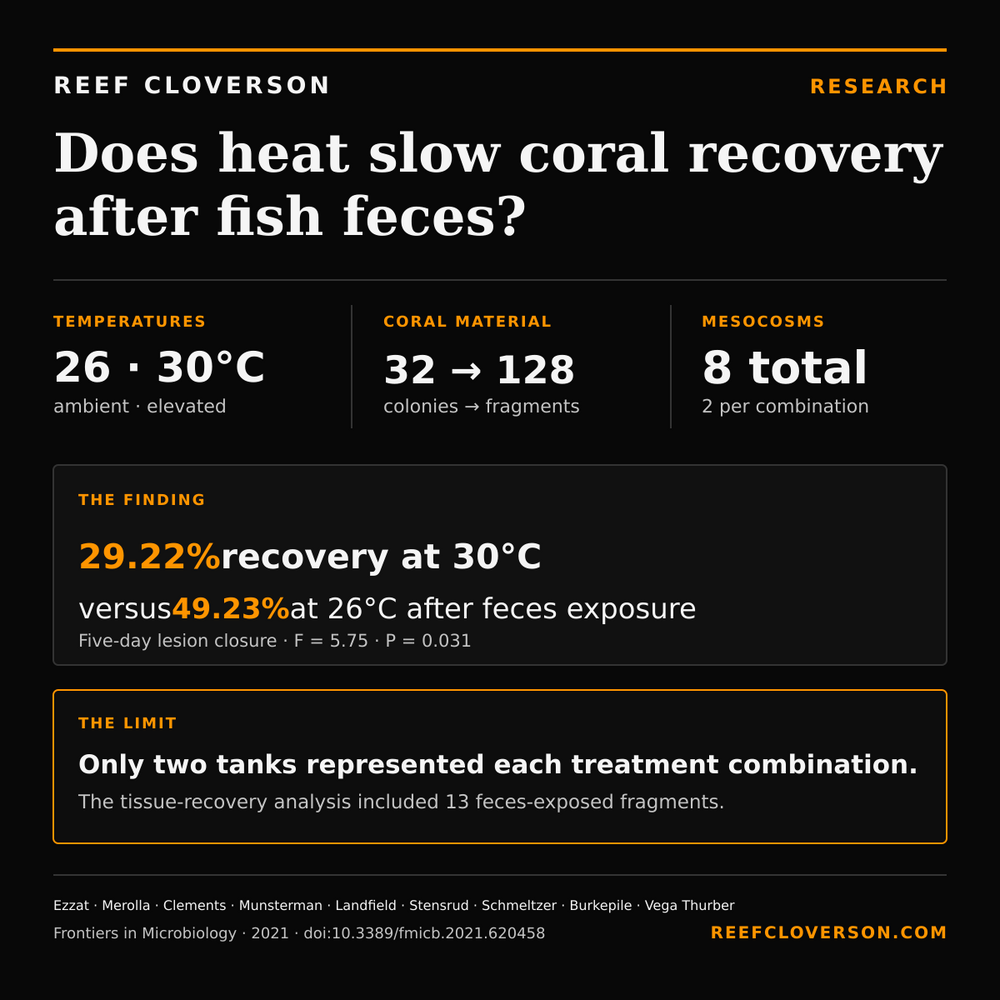
Sep 24, 2026 · 5 min read
Does heat slow coral recovery after fish feces?
A 2021 eight-mesocosm experiment found that warm water reduced tissue closure after surgeonfish-feces exposure and altered microbial responses, but only two tanks...
Read review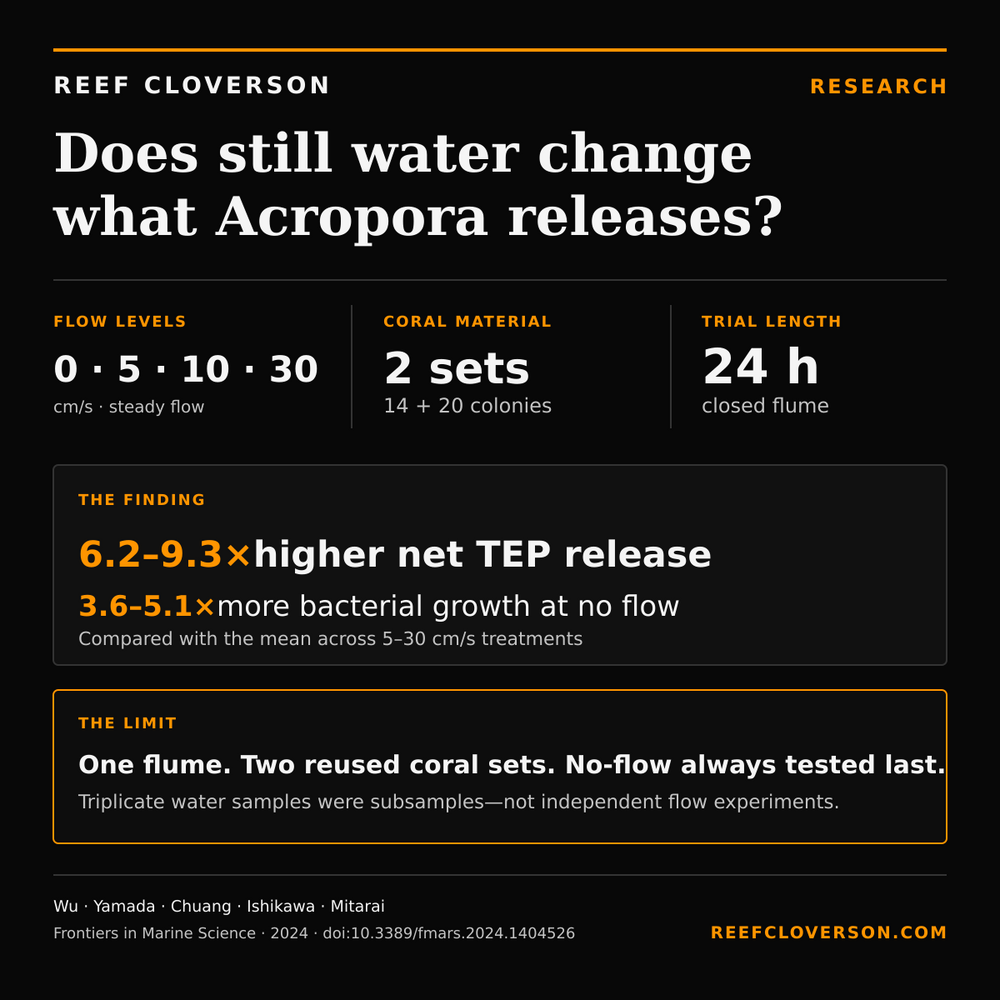
Sep 24, 2026 · 5 min read
Does still water change what Acropora releases?
A 2024 flume experiment found that stagnant water produced much larger transparent-particle release and bacterial growth than flowing conditions, but only two...
Read review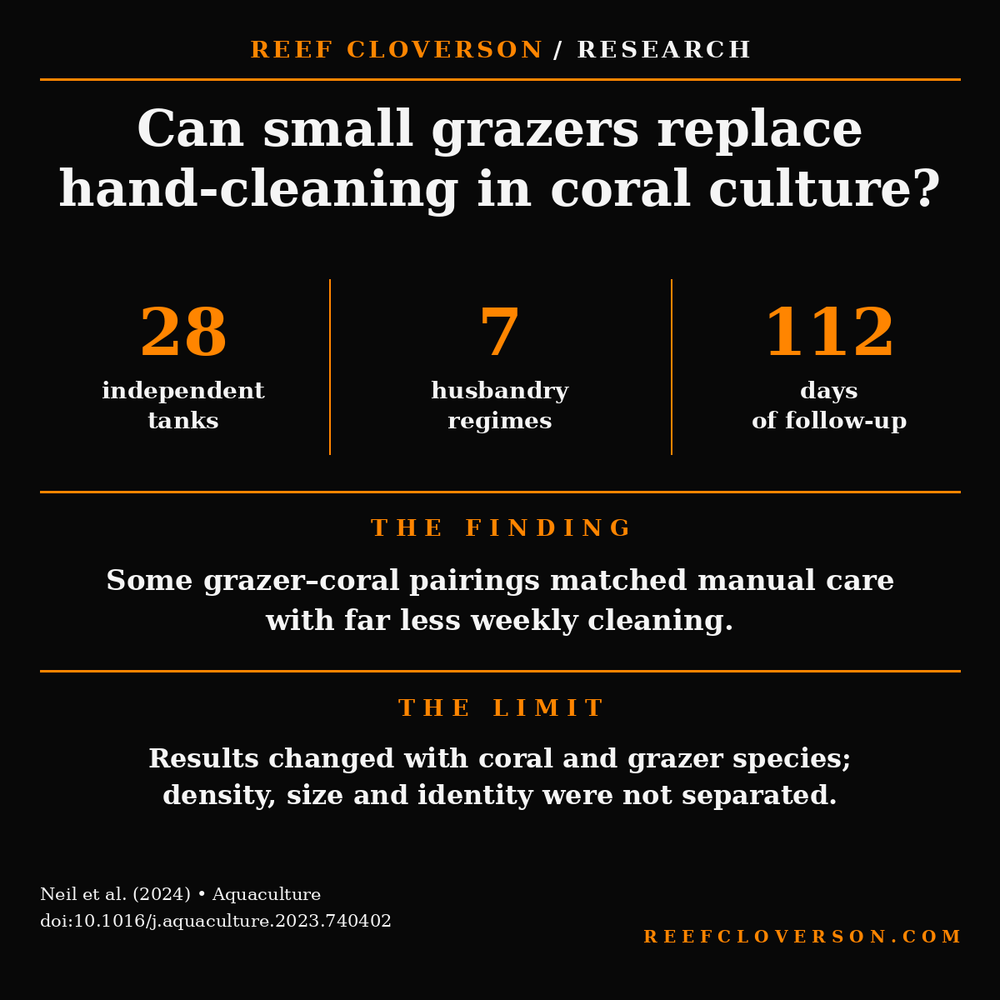
Sep 24, 2026 · 5 min read
Can small grazers replace hand-cleaning in coral culture?
A 28-tank coral-aquaculture experiment tested whether small invertebrate grazers can control fouling while preserving young-coral survival and growth.
Read review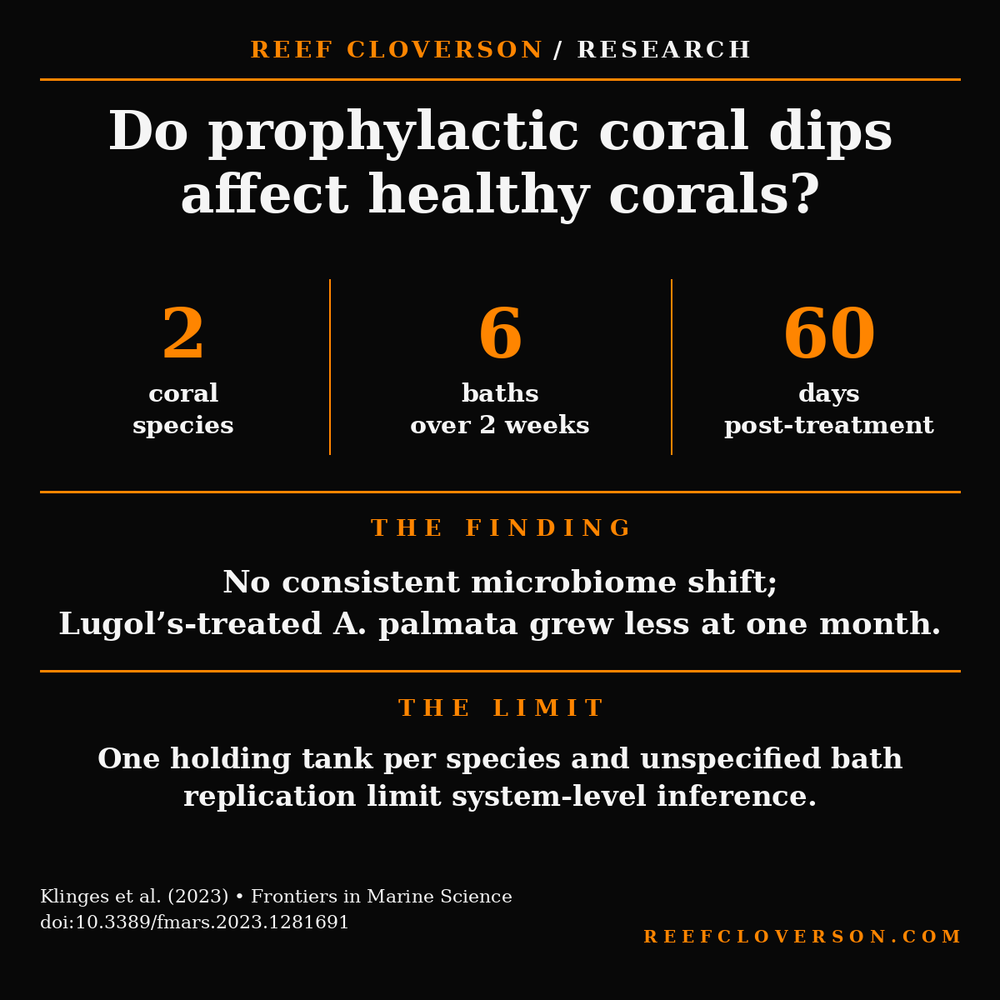
Sep 24, 2026 · 5 min read
Do prophylactic coral dips affect healthy corals?
A controlled Mote Marine Laboratory study found no consistent microbiome shift after two common prophylactic coral dips, but Lugol’s-treated elkhorn coral grew...
Read review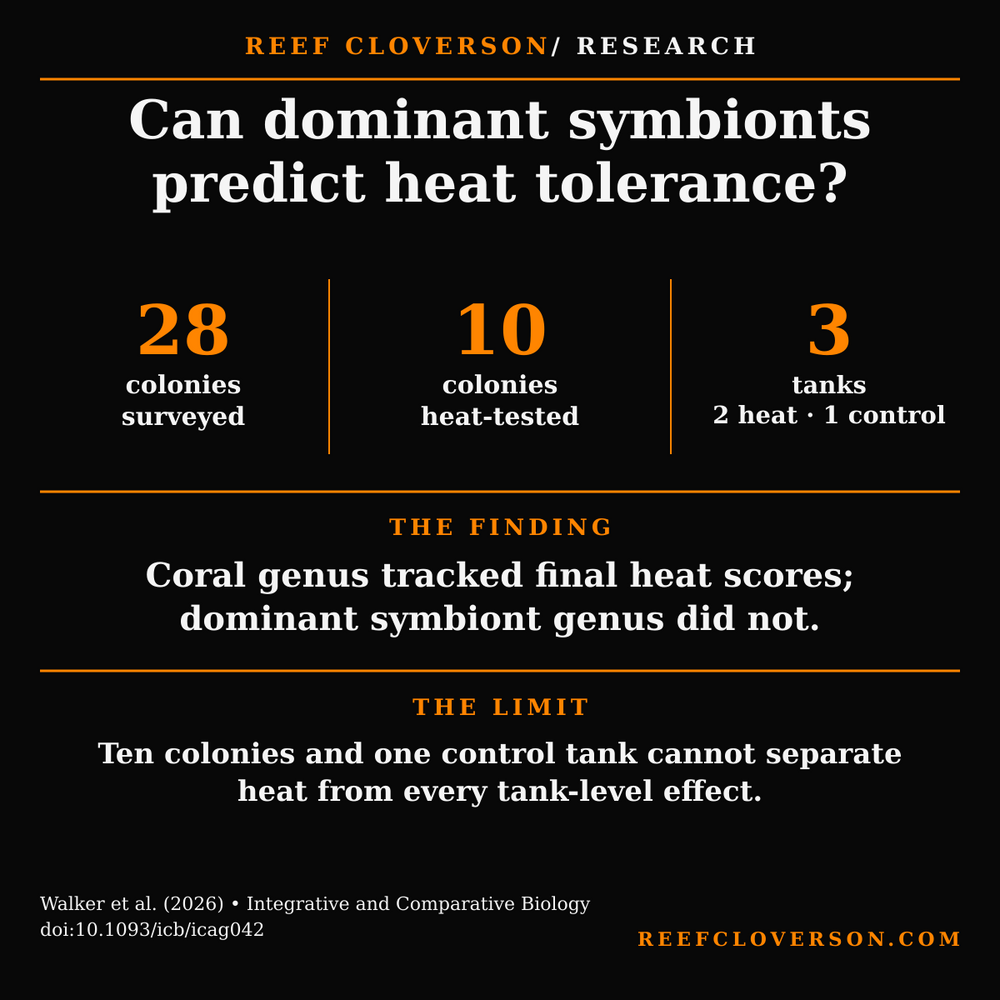
Sep 19, 2026 · 4 min read
Can dominant symbionts predict heat tolerance?
A 2026 U.S. aquarium study found that coral genus, not dominant Symbiodiniaceae genus, tracked short-term heat scores—but one control tank limits causal...
Read review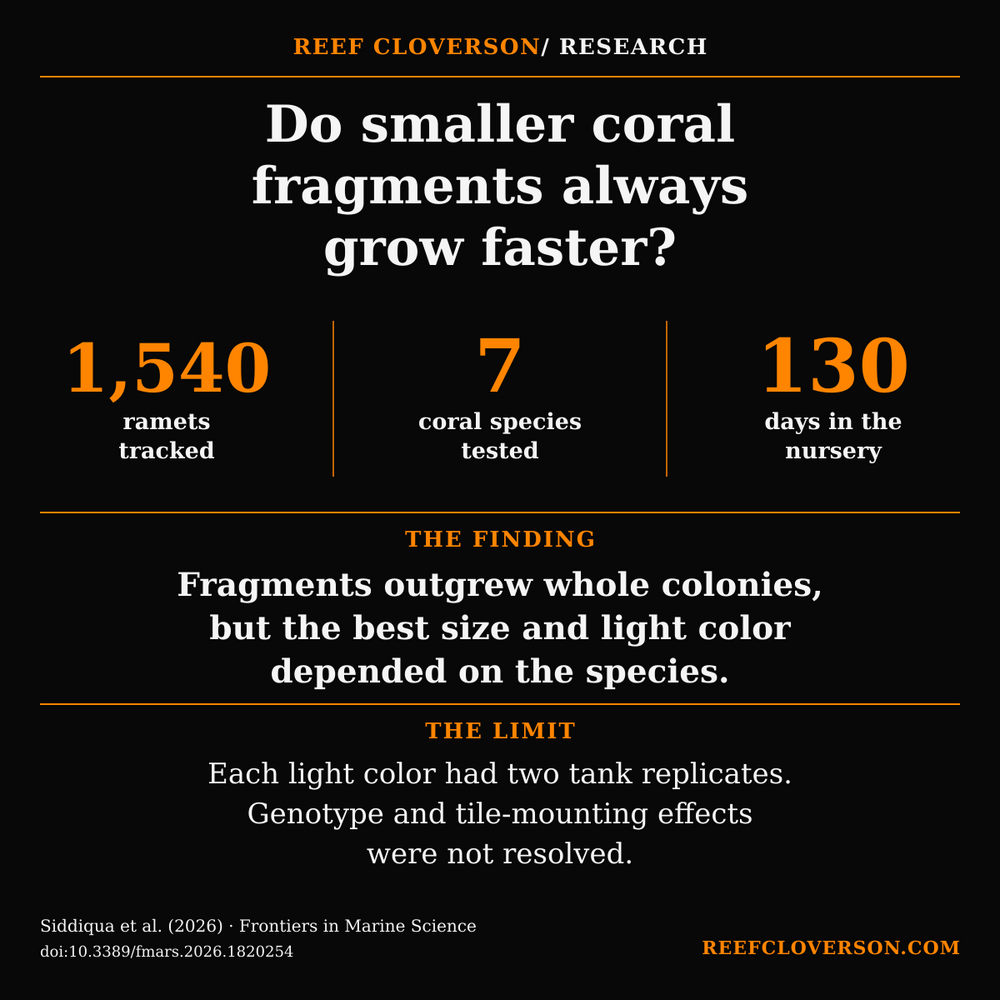
Sep 17, 2026 · 3 min read
Do smaller coral fragments always grow faster?
A 2026 land-based nursery study tracked 1,540 coral ramets and found that faster fragment growth did not translate into one universal best...
Read review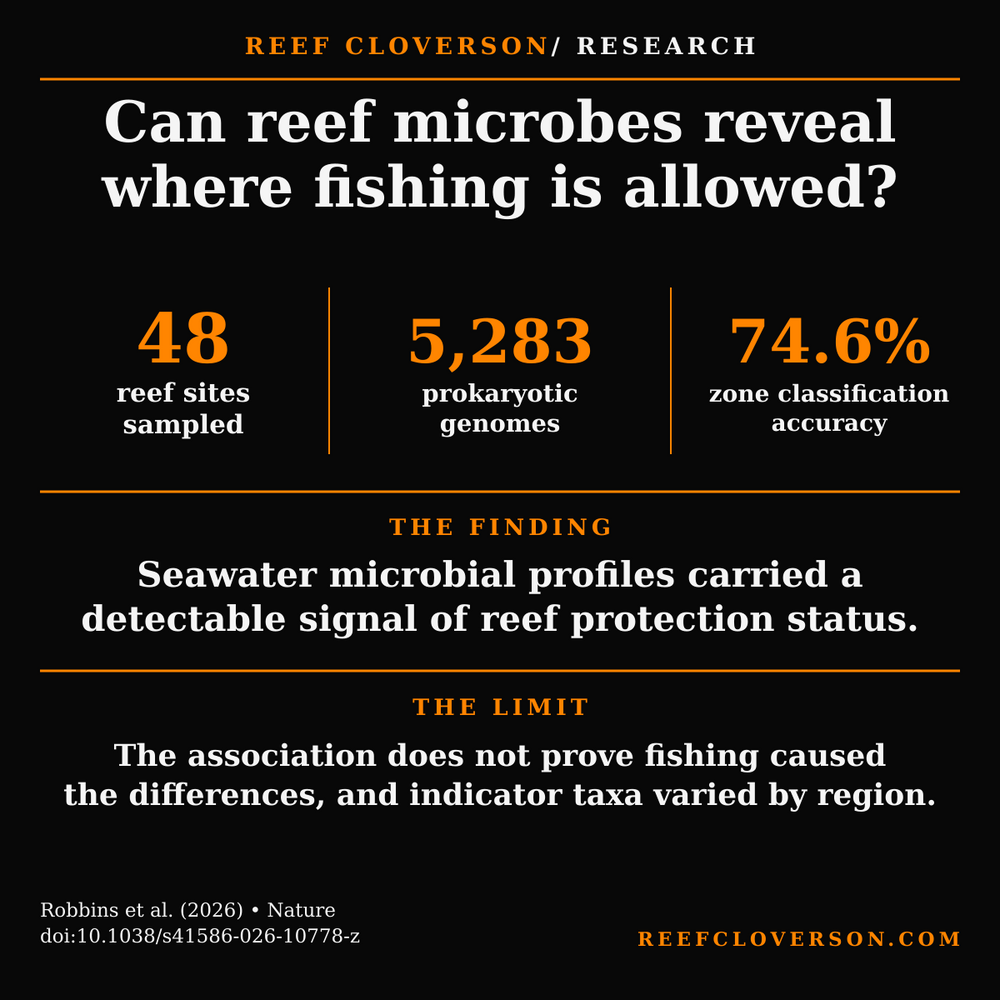
Sep 17, 2026 · 3 min read
Can reef microbes reveal where fishing is allowed?
A 2026 genome survey across 48 Great Barrier Reef sites found that seawater microbial profiles carried a measurable—but not causal or universal—signal...
Read review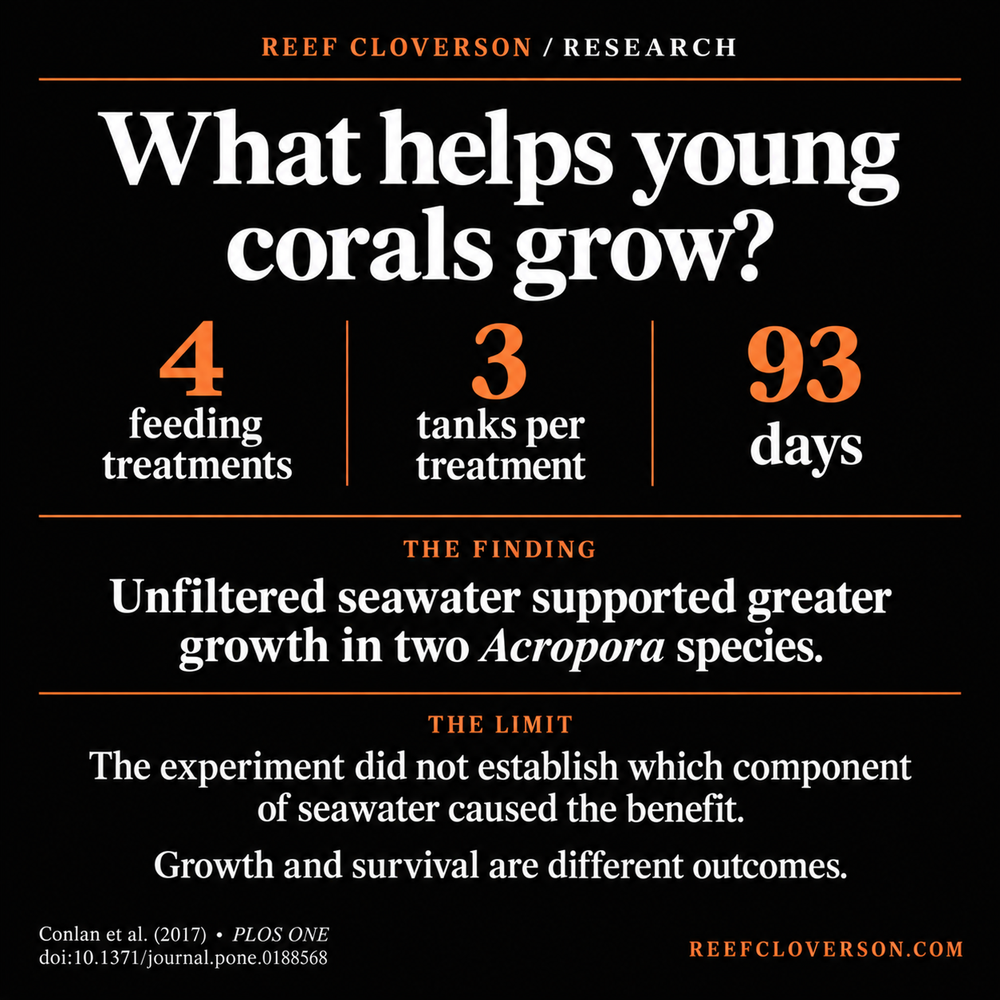
Sep 13, 2026 · 1 min read
What helps young Acropora grow?
Four feeding treatments, a result for each, and the limits of what the experiment can tell us—a visual guide to coral nutrition.
Read review